Been-There TCK Care
If “home” is complicated for you…
Explaining a globally mobile childhood can be exhausting. Here, you don’t have to. It’s essential to who you are, and it’s understood from the start. Unpack it with someone who knows the right questions, or let it rest in the background and get to feeling better.
Meet Brianna
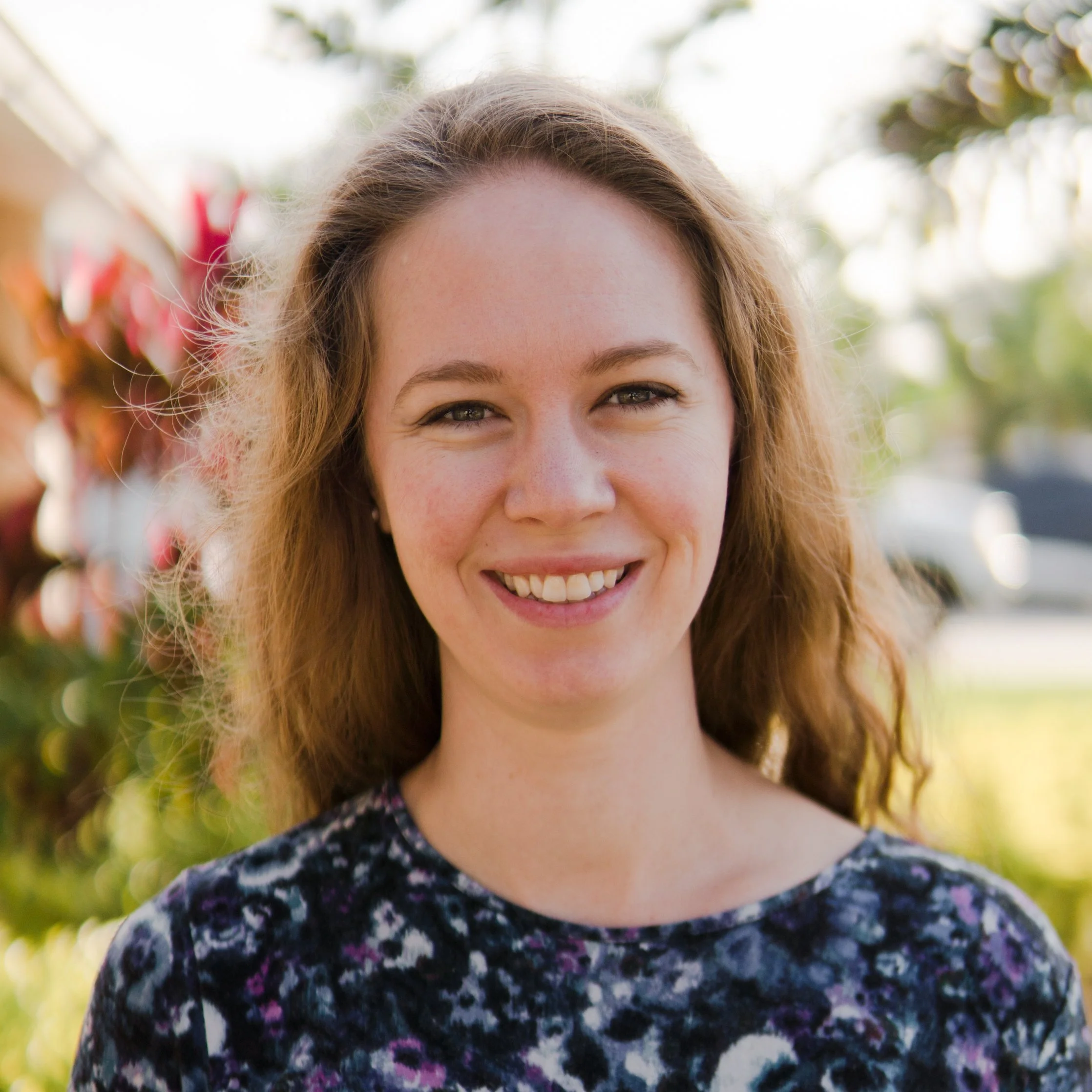
I’m Brianna White, a Licensed Marriage and Family Therapist, a TCK who grew up in Papua New Guinea, and the founder of Intrepid Counseling. I’m determined, a little nerdy, and comfortable when plan A turns into plan F. I offer therapy for TCKs and families wherever they are, plus a community for the professionals who care for them, so no one has to figure it out alone.
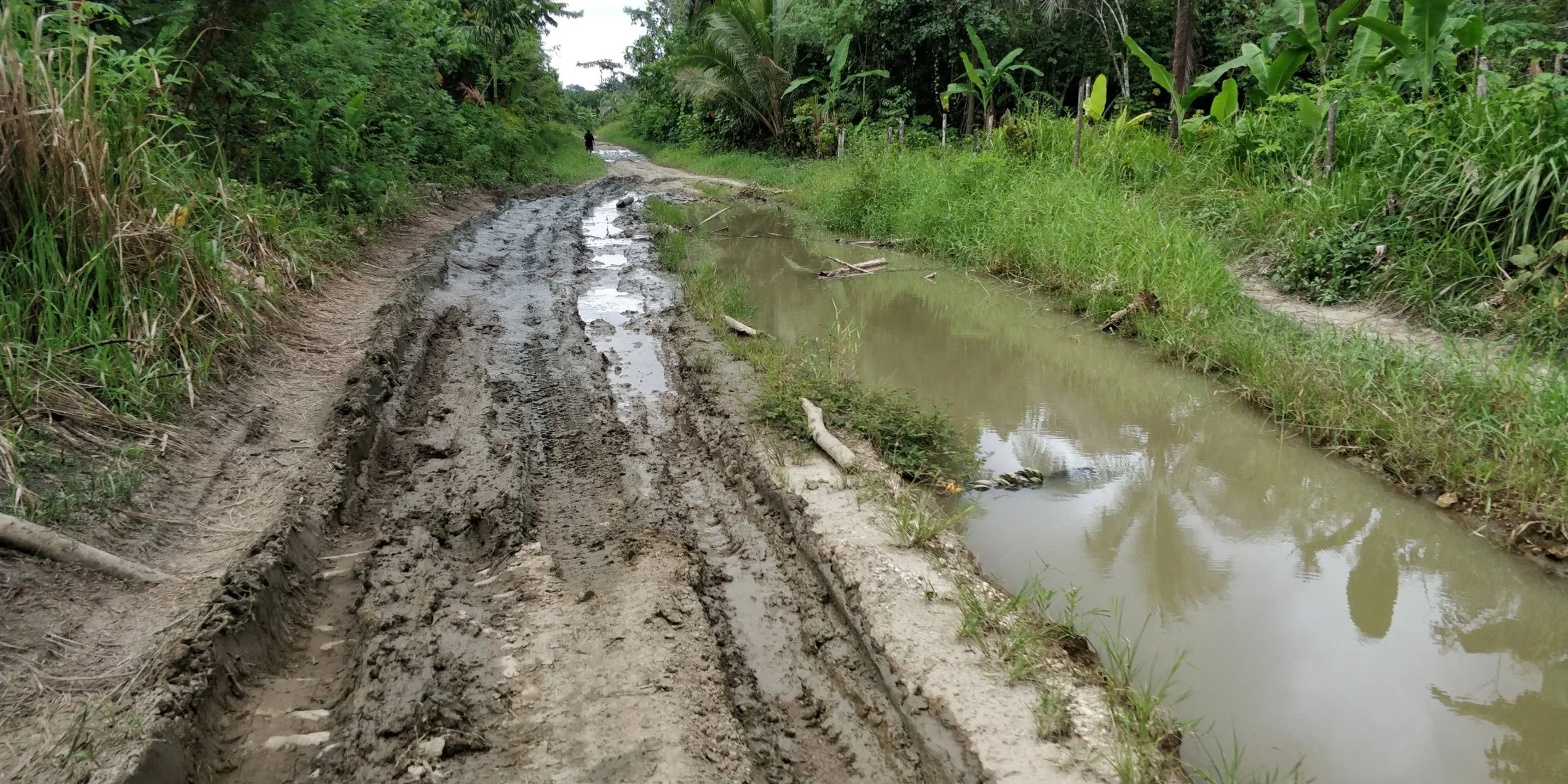
Messy like this is normal, so is getting stuck.
You need a therapist who understands what’s normal in a globally mobile family and how an international or multicultural childhood shapes a person. You won’t have to teach me about that. I’m also not shockable by discussions of boarding school, evacuations, exposure to war or other conversation “show-stoppers.” We will get right to talking about you, where you are now and where you want to go, with plenty of time on the way to unpack where you’re coming from.
Where to start
The first step is a 15-minute video call where I’ll answer any questions you have and let you know how I can help. If I am not the right person, I’ll do my best to get you to the right person, and I am pretty well connected. Then, if we agree to work together, we’ll spend another 10–15 minutes setting up the logistics for starting online counseling, including scheduling our first session.
My Story
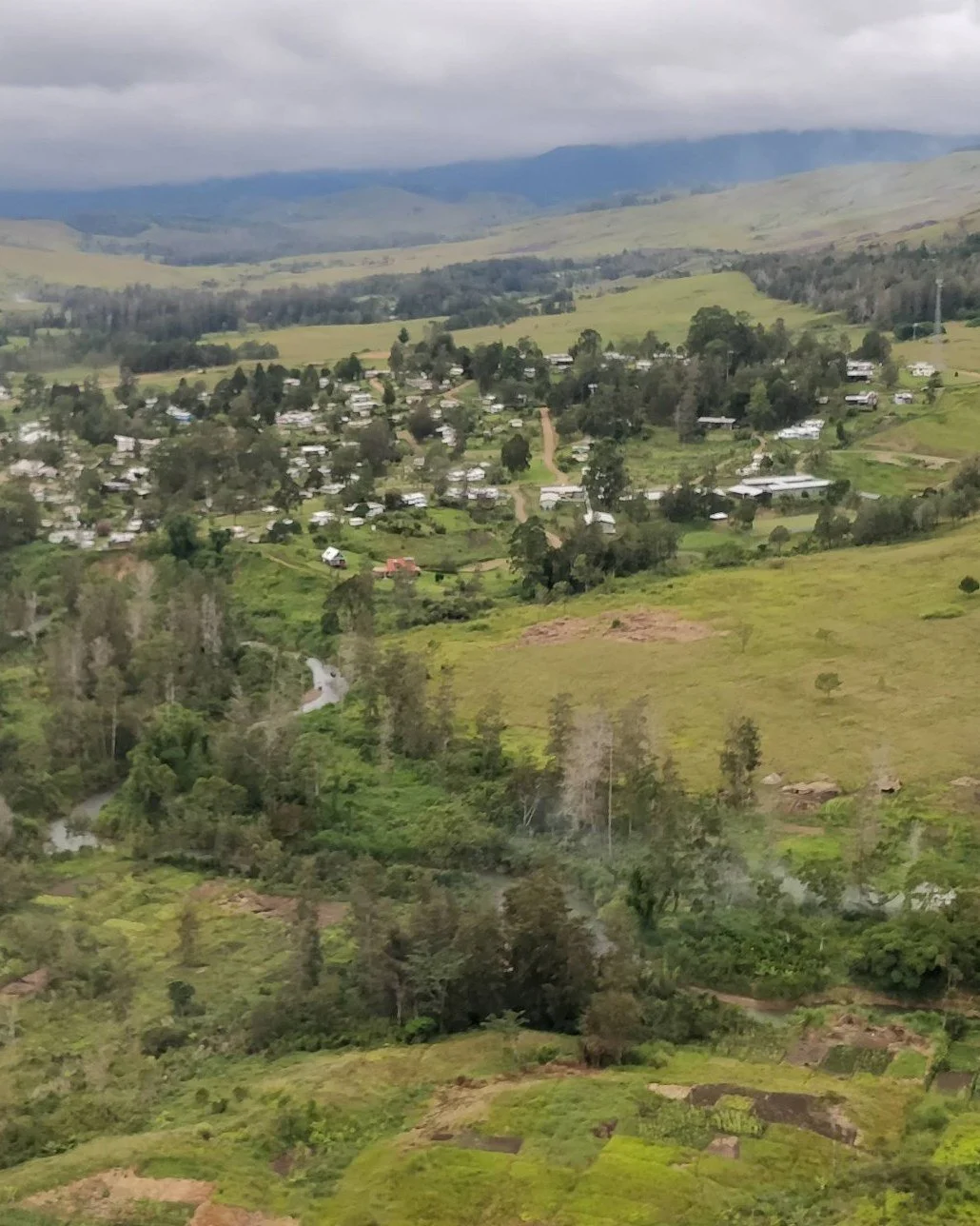
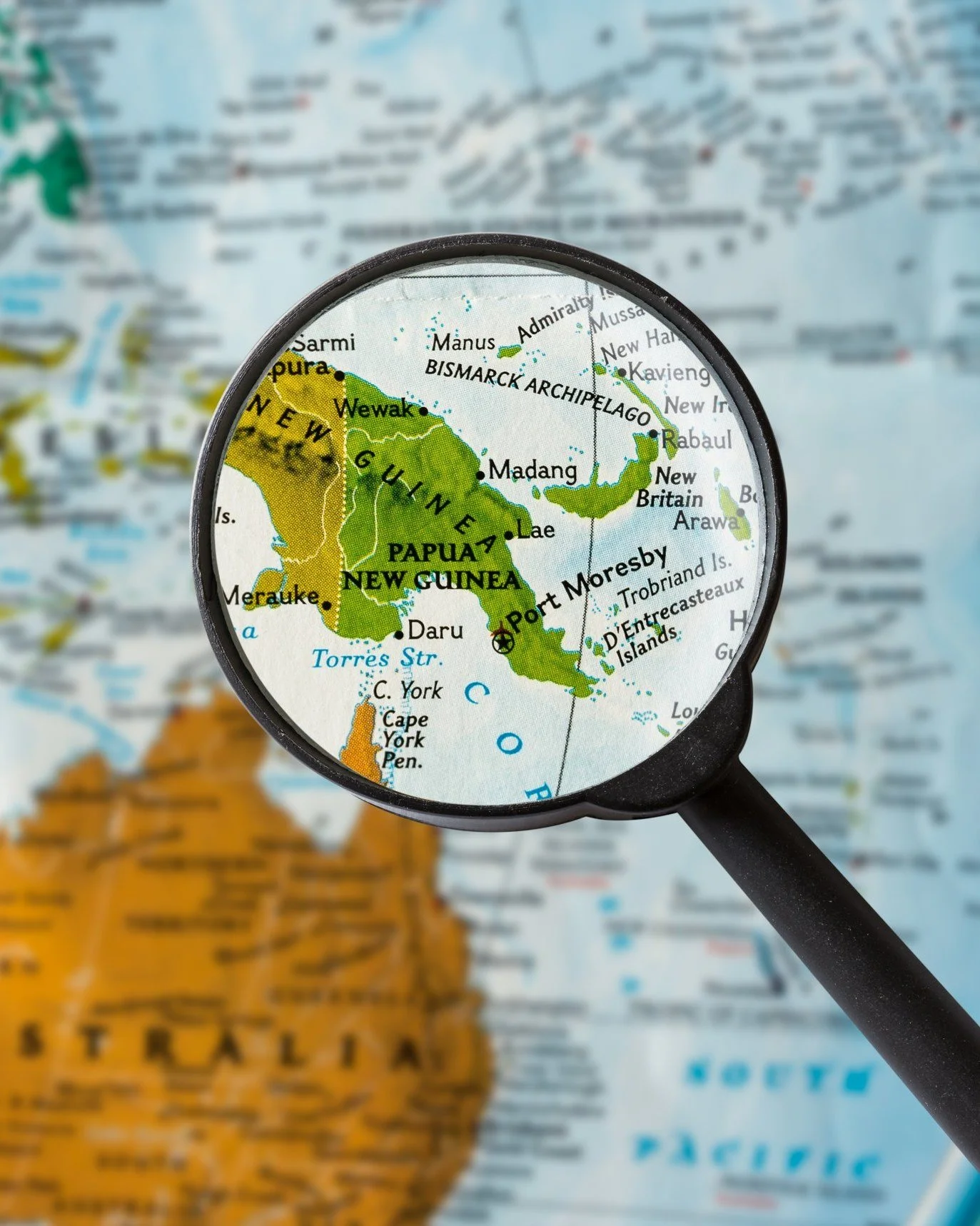
I’m Brianna White, a Licensed Marriage and Family Therapist and the founder of Intrepid Counseling, a practice for Third Culture Kids and the people who care for them. I’m also a TCK. As the child of missionary Bible translators, I grew up traveling around Papua New Guinea, “the land of the unexpected,” and it lived up to the name.
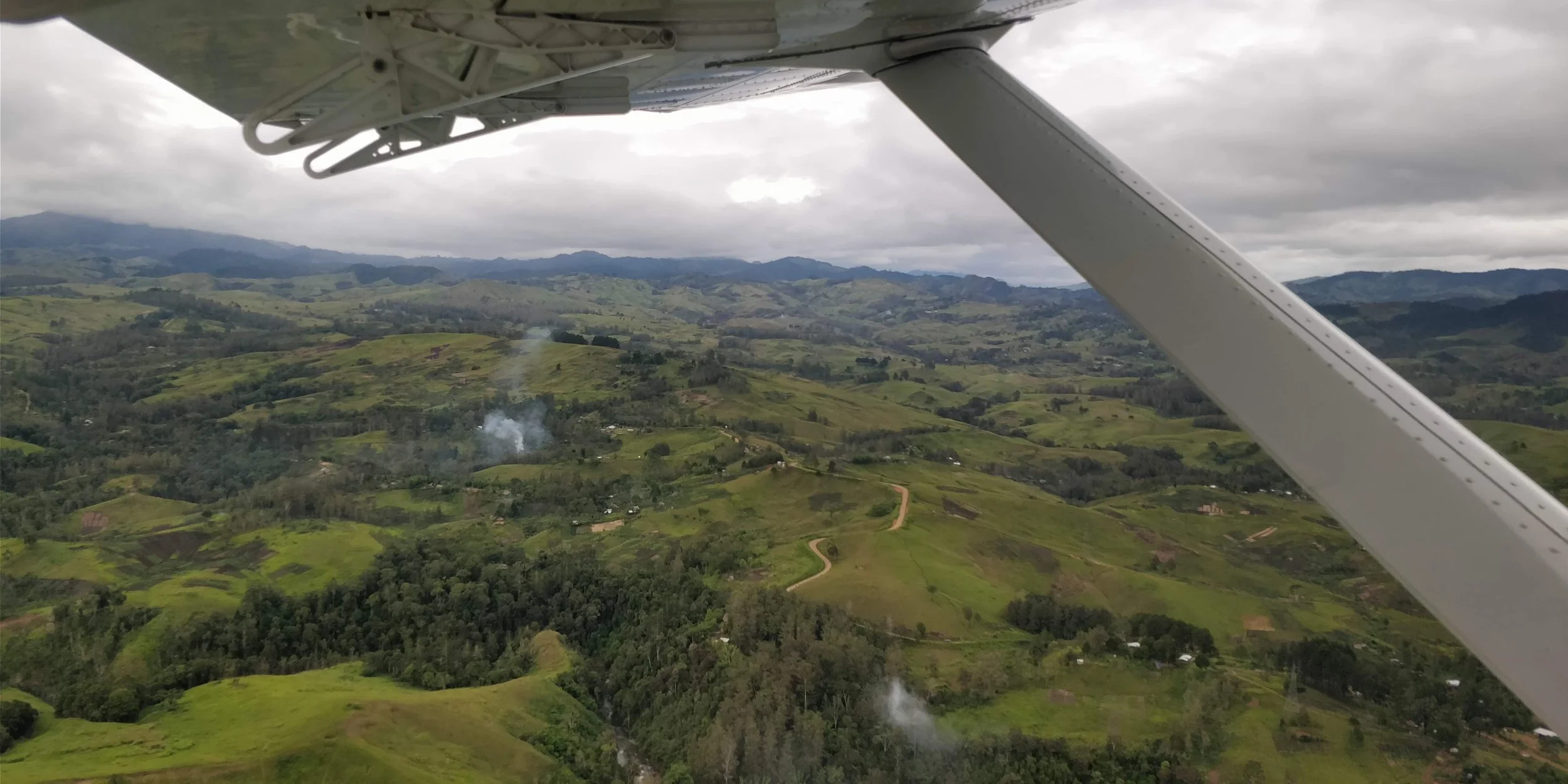
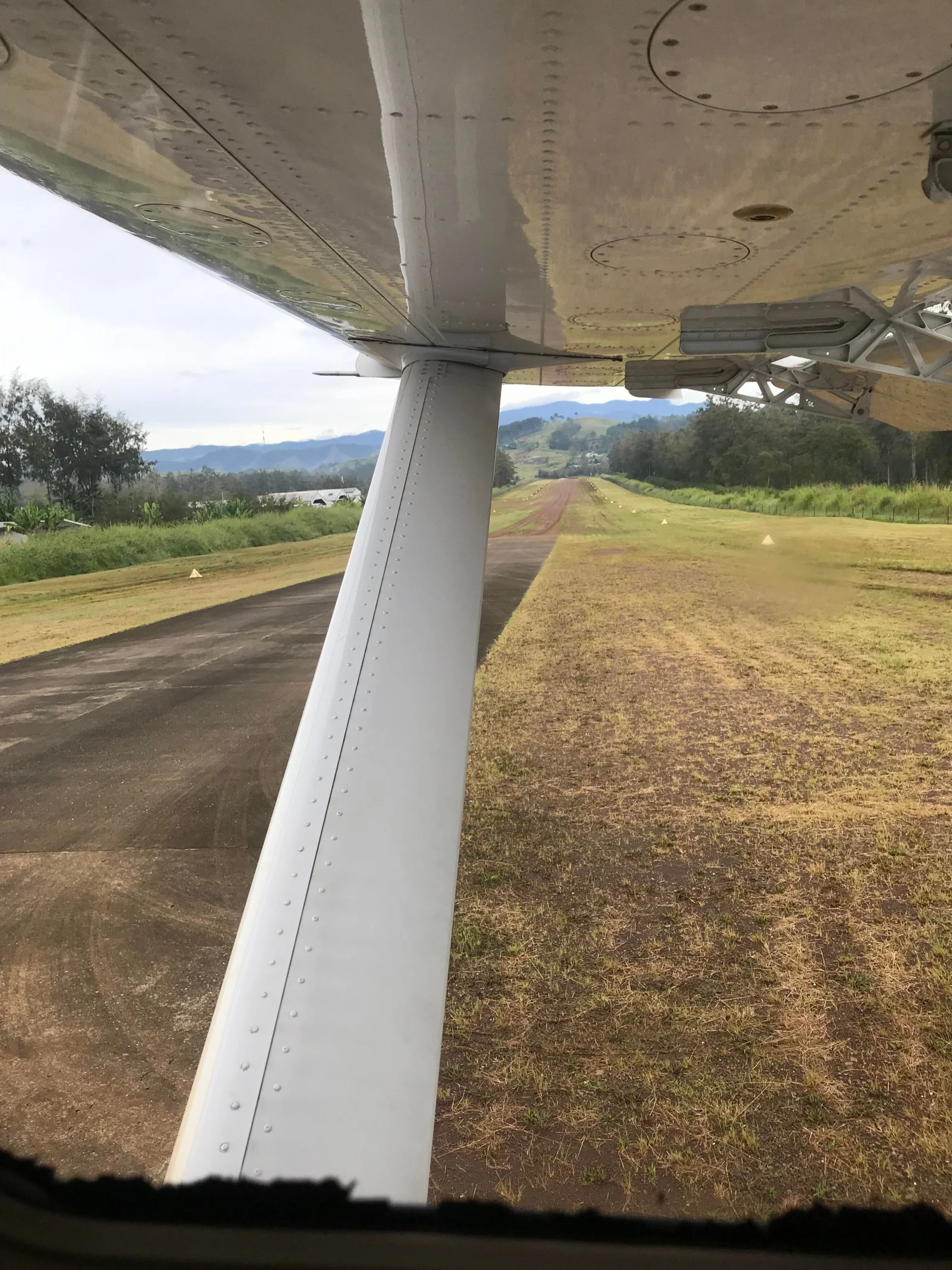
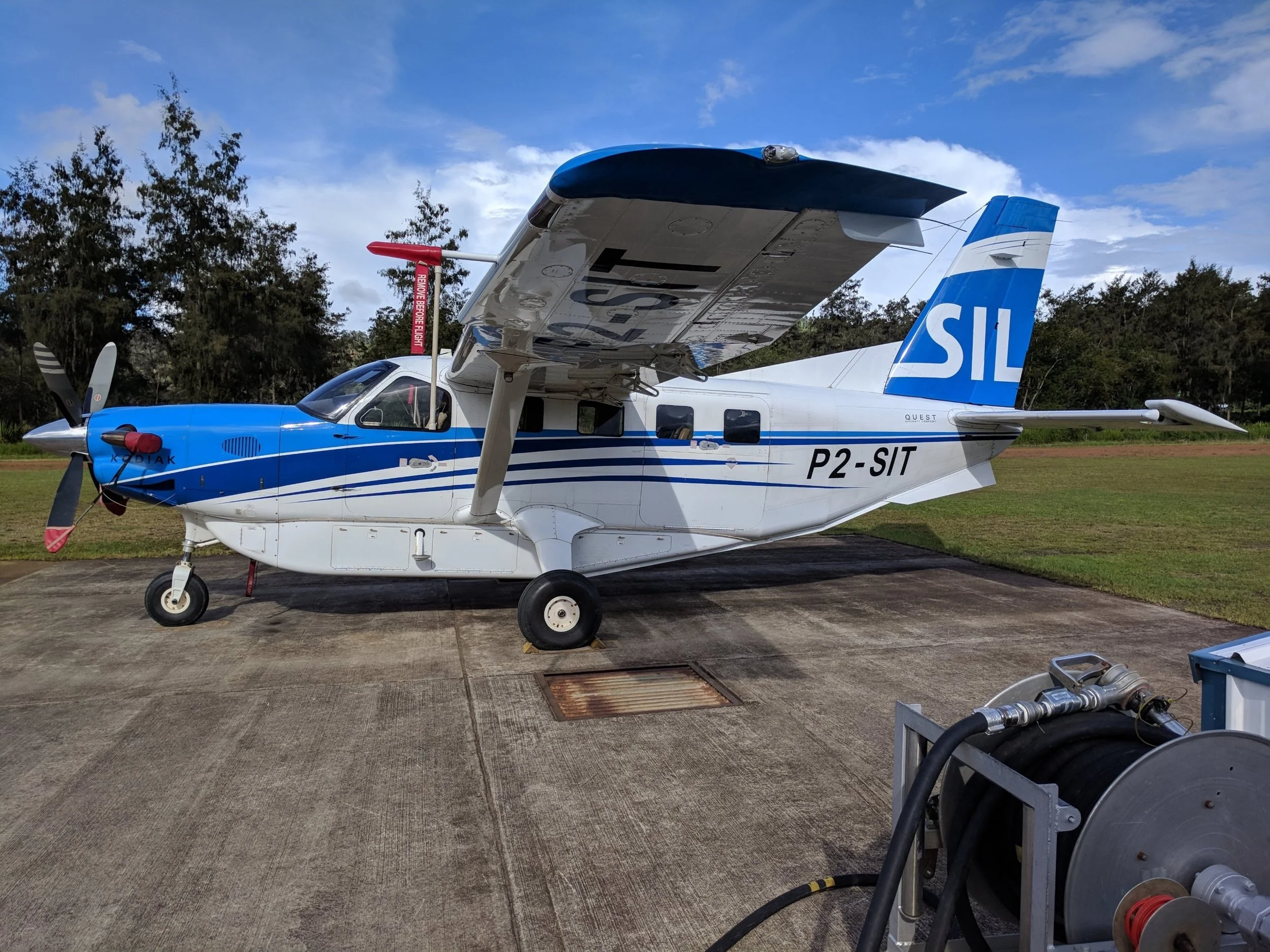
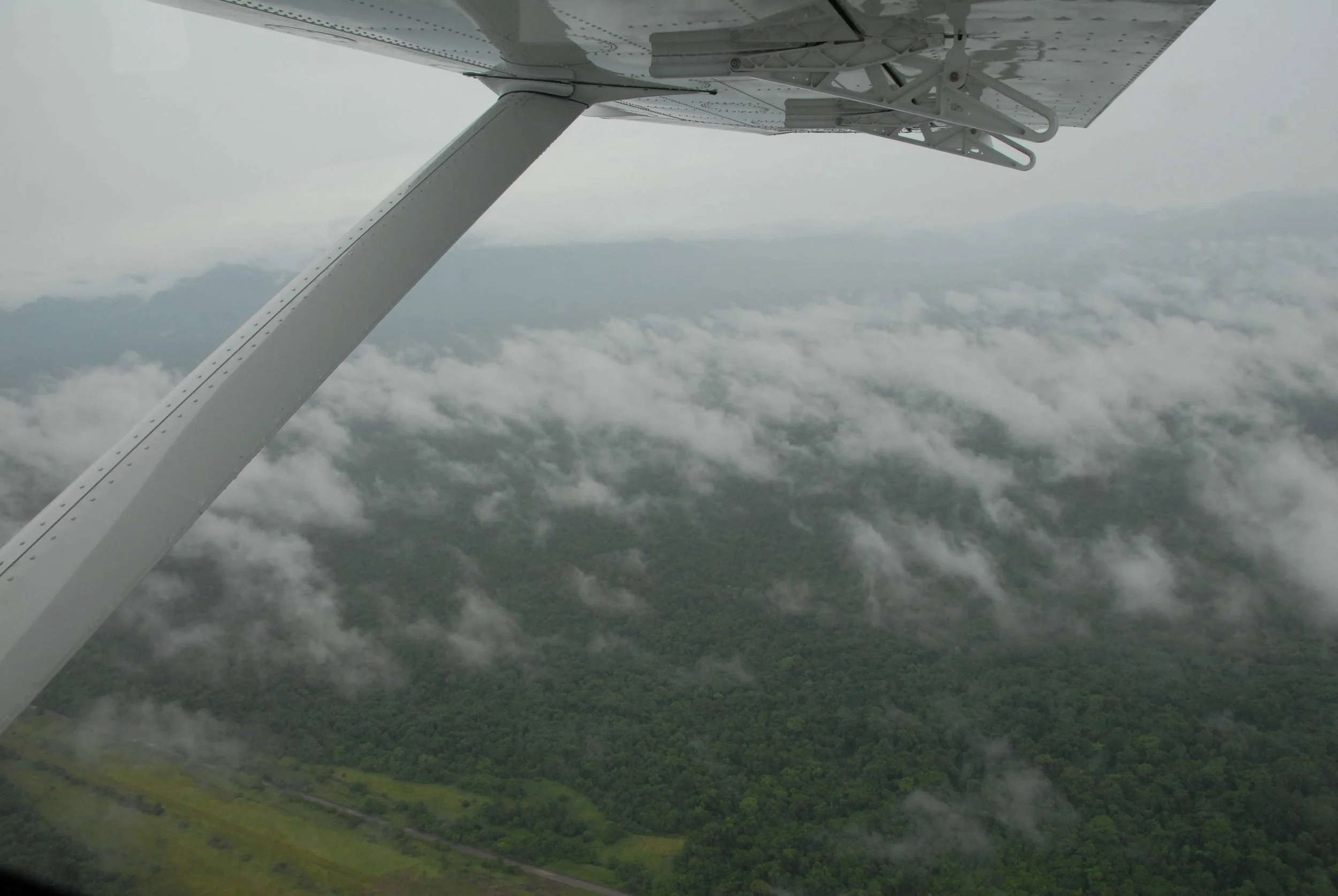
Traveling there took determination. Getting home could mean corkscrewing tiny planes into mountain valleys, borrowing a canoe when the road flooded, and getting comfortable with transport plan A turning into plan F. One particular day it meant our little plane took off, the pilot saw that the weather was too bad to continue, and it felt rough! So we landed to wait. When the sky cleared, we tried again and made it. I know getting where you’re trying to go can be slow, defy your planning and even be scary sometimes, but you will make it. That conviction comes with me as I meet clients and hear where you’re trying to go. We can get there, even when the route is complicated.
In Papua New Guinea, where medical and mental health care can be hard to reach, getting help sometimes meant evacuation. It was called getting “sent home,” even though for a TCK it meant leaving home, friends, school, everything, often never to return. That’s a high price, even when it’s the right call. So of course people kept quiet about not being okay, and got worse, secretly. That’s when I became passionate about making sure no one has to lose everything to get help.
Maybe it’s time now to reveal how not-okay you were growing up, when you were more or less successfully pretending to be fine. It’s safe here. Or maybe you’re in the middle of it right now, and you’ve decided to quit pretending you’re fine and get help to actually be okay. Either way, that takes courage, and you don’t have to do it alone. Let’s start wherever you are.


My Training
My training followed that passion. After a psychology degree at Taylor University, I chose a master’s in Marriage and Family Therapy because I believe caring well for children means working with their families too. I chose Fuller Seminary for that program so I would also be theologically trained at the graduate level. I believe it is essential to mental health to find peace and comfort in what you most deeply believe is true. Then I spent six years at a Child Advocacy Center helping children and teens recover from abuse, under a supervisor who was herself a TCK. That’s where I learned how global mobility and cultural complexity can quietly make every other struggle harder, and how much it helps to name them.
When a planned move abroad fell through and life with two small children called for a “career in a suitcase,” I built a telehealth practice from scratch, with a mentor who walked me through it one step at a time. It turned out to be the opening I’d been waiting for since high school.
My Approach
Today my practice blends evidence-based, culturally humble, trauma-informed care with a nerdy streak. I use an evidence-based model that embraces complexity when symptoms fit more than one pattern, and word banks for feelings that are hard to name. Sometimes I use games, stories, or diagrams to explore tricky emotional situations with kids and parents until they make sense. We figure out how you work, so you can steer through big emotions, and find a peaceful way to get what you want and need.
Colleagues describe my work as showing “a deep and sophisticated understanding of the population that is hard to match,” and I was asked to be part of a team that worked together to define what “TCK-informed” means for the field. How did I get this expertise? TCKs are my whole focus. Actually, nearly everyone I’ve worked with as a therapist grew up/was growing up in a different country than me. So, it’s easy to see why it was natural for me to accept that cross-cultural therapy is my thing.
Whether I’m sitting with a young adult sorting out where home is, or gathering member care staff from a dozen organizations for a monthly show-and-tell of resources, the experience I want to create is the same: you are seen, what you’ve lived makes sense, and you don’t have to figure it out alone.
Listen in or watch,
and picture what working together could be like
-
![Thriving in the Bush podcast cover art: a small bird perched on a cactus]()
Podcast: Trauma in children, how it's different
Thriving in the Bush podcast. Katie Reid and I talk about how trauma shows up differently in children than in adults, and how parents can help.
-
![Brianna White in conversation with an interviewer on a video call]()
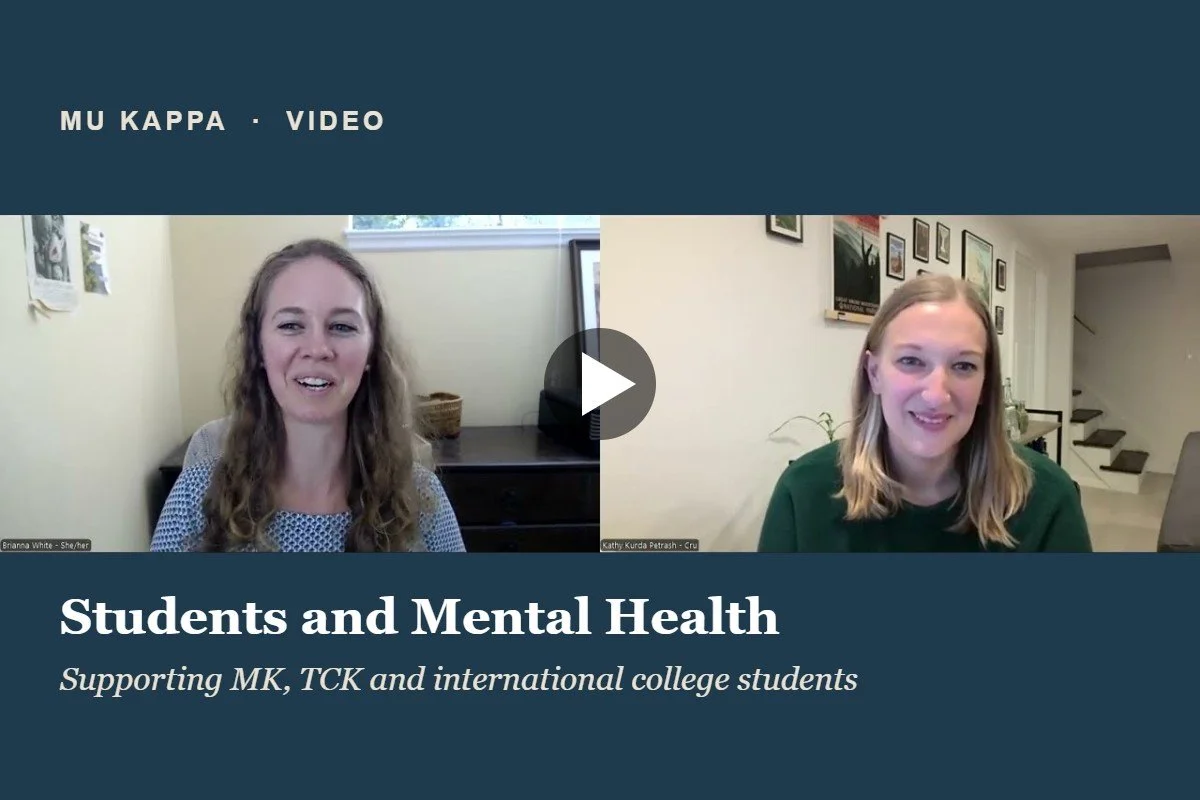
Video: Supporting MK and TCK college students
Mu Kappa video on students and mental health: supporting MK, TCK and international college students.
-
![Brianna White smiling outdoors, beside the CE Cafe course title Working with Adult Third Culture Kids]()
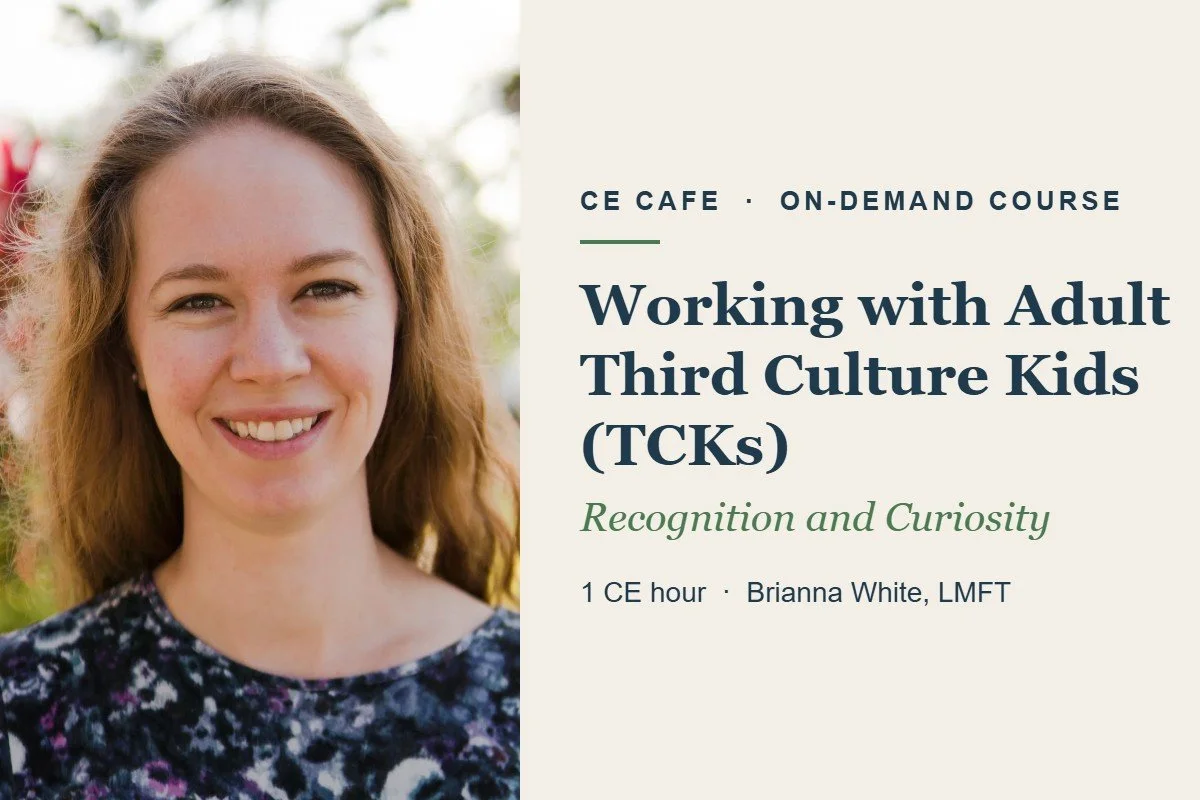
CE course: Working with adult TCKs
A 1-hour on-demand CE course for clinicians on CE Cafe: who adult TCKs are, their strengths and challenges, and how a cross-cultural upbringing can shape what brings them to therapy.
-
![First page of the Pre-Home Assignment H.A. Bucket List worksheet by Brianna White, LMFT]()
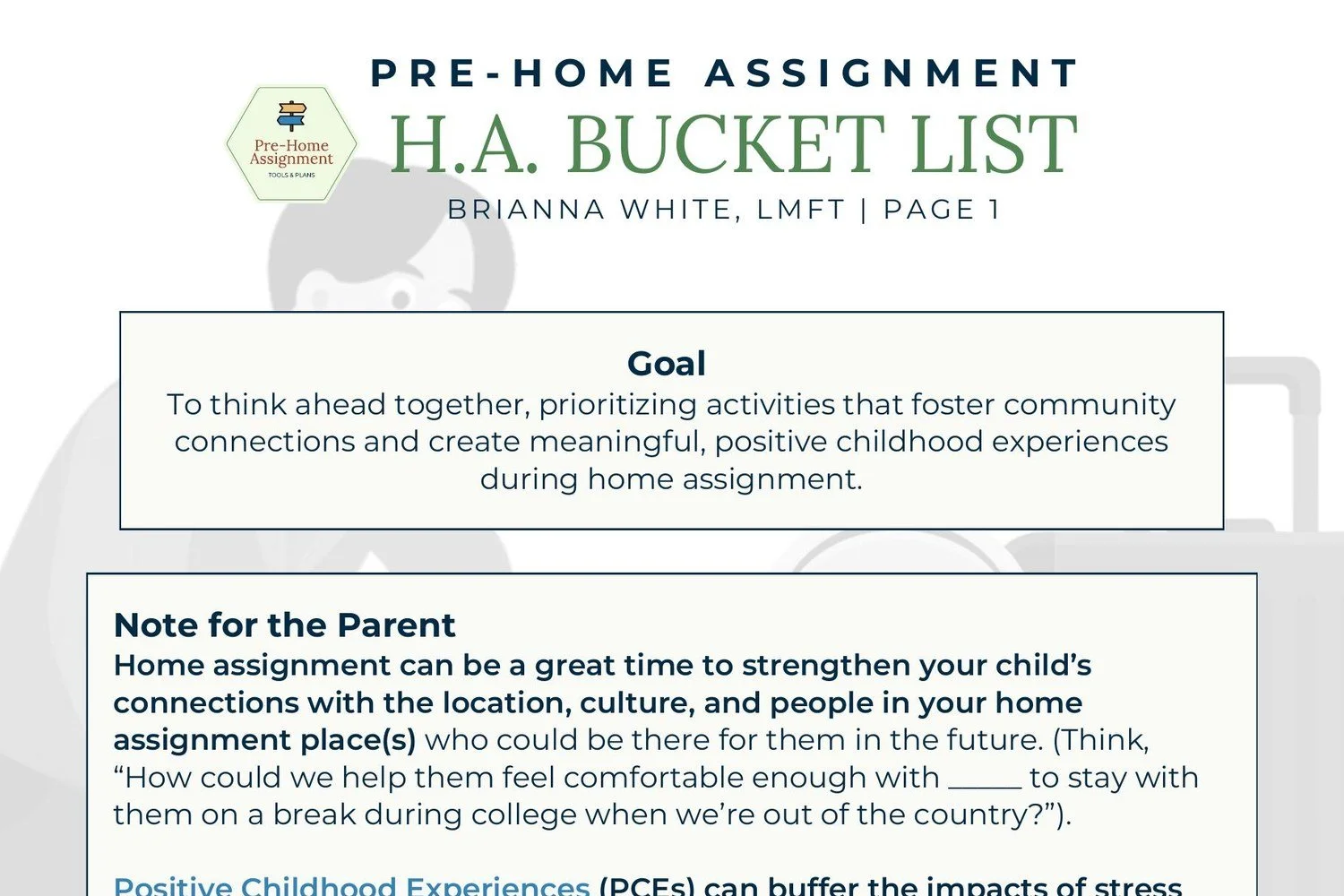
Worksheets: Wayfinder Home Assignment tools
Pre-Home Assignment tools I wrote for Interaction International’s Wayfinder program, to help families plan a home assignment that builds connection for their kids.