
A TCK therapist who already knows the questions
"Where are you from?" Uh... If that question still makes you pause, you're in good company. Maybe you've tried counseling before and spent half the session explaining what a furlough is. Maybe you look and sound like you belong here, until you start telling any story at all that took place before college.
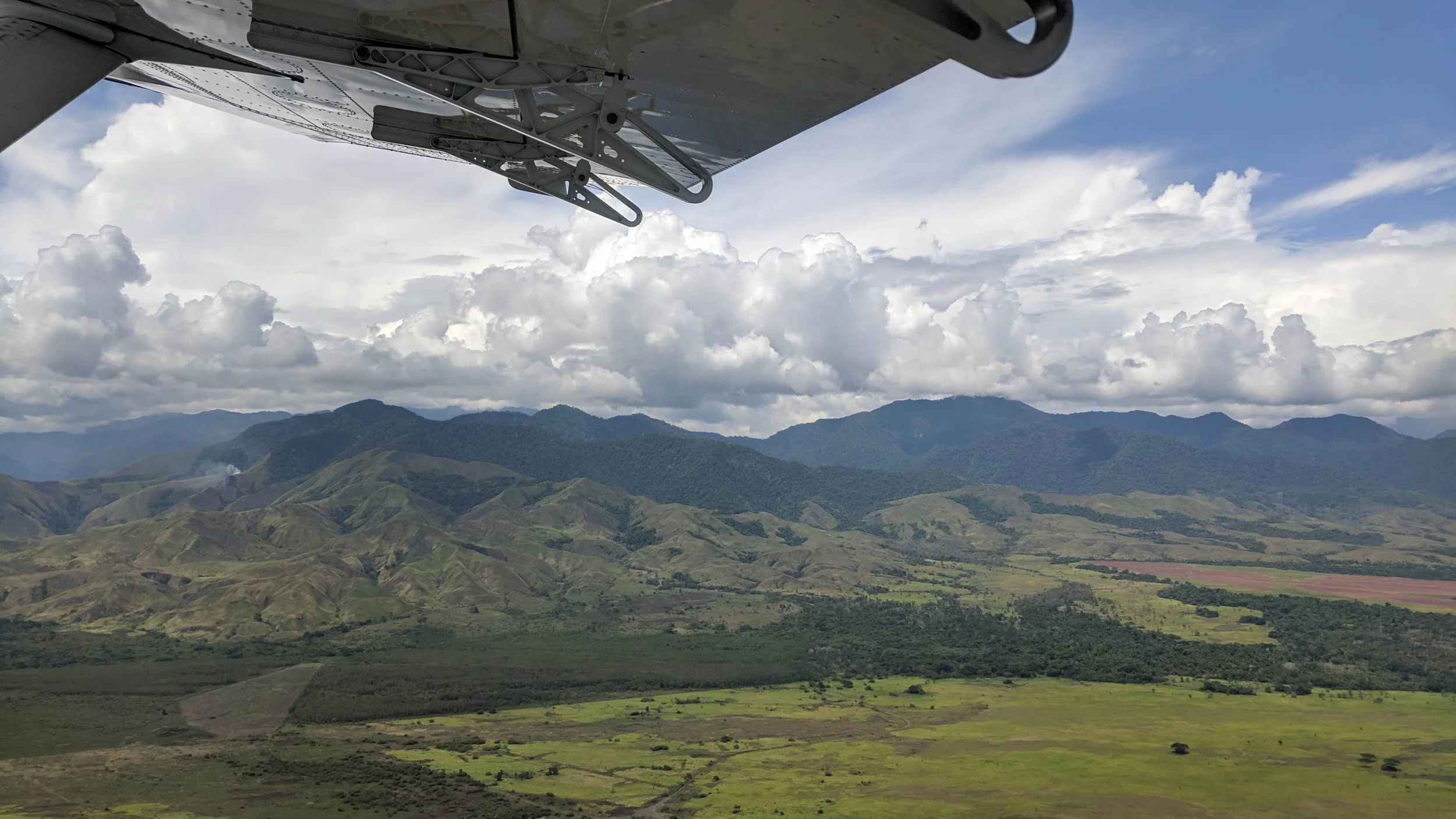
A feeling common to many Third Culture Kids is that of being seen, but unknown. I'm Brianna White, LMFT, a TCK therapist and the founder of Intrepid Counseling. I grew up in Papua New Guinea as the child of missionary Bible translators. Below, I'll walk through what working with a TCK therapist is like, who it's for, and how we can start.
What is a TCK therapist?
A TCK therapist is a counselor who understands, from the inside, what it's like to grow up among worlds: the parents' culture, the host culture, and the shared "third culture" of kids who live between them. You don't have to translate your childhood before we can get to work.
I think many of us TCKs silently carry in our hearts, not only all the places we've called home, and places we returned to often but never lived, but even places we almost lived. Everywhere we go, someone we know is nearby, more or less. And there's nowhere we can go to be with everyone. That is the delight and grief of being a TCK.
My favorite moment in this work is saying, "Yes! That's so normal for us. Not the easy kind of normal necessarily, but it's very much a thing." I believe TCKs should have access to mental health care wherever they live. They shouldn't have to fear that admitting they need help means they lose their whole world. And when TCKs get to have their culture named and described early, they can skip a lot of the "who am I" angst and grow into their complexity in a way that makes sense.
Not everything in TCK care is about "TCK stuff," though. Often it's the stated issue plus the TCK stuff hiding beneath it: a hard transition, plus grief, plus a body that's been on high alert for a long time.
Common struggles TCKs bring to therapy
Belonging everywhere and nowhere: You have a paragraph you recite when someone asks where home is.
Grief that stacked up quietly: Friends who moved, homes you packed, pets you left, a graduation you missed.
Anxiety in transition: A lot of my clients come when they are facing intense anxiety during a transition.
No default setting: What country we will live in after high school is a given for most people. For many TCKs it is a huge life decision made in late childhood.
Uneven development: Fluent in airports and three currencies, stumped by a bank. When I was 26, I physically entered a bank for the first time.
Hard things that "don't count": "That's just how it was" can hide real trauma.
How do I know if TCK therapy is for me?
Do you edit your stories to keep people comfortable? That editing is tiring, and therapy is one place you don't have to do it.
Do you feel like a beginner in a place you're "from"? Common sense is only common to those with similar experiences.
Has a counselor ever treated your story as too much? Here, the moves, the goodbyes and the plan-F flights are part of the conversation.
Is a decision heavier than it looks to others? It's hard to decide where home will be when you're not sure where it's ever been.
Who I see as a TCK therapist
Therapy that makes space for your complicated backstory is important for adult TCKs, missionary kids, military brats, foreign service and business kids, and domestic TCKs who grew up cross-culturally within one nation. TCK teens, and parents raising TCKs, this is a great time to start to understand and own the complex sense of home you have. This kind of therapy is especially for you if you're living in a country you didn't grow up in and still feel like the new kid, even decades after you arrived.
It may not be the best fit if you need a higher level of care right now, or if you're located somewhere I'm not able to practice. If I'm not the right person, I'll do my best to get you to the right person.
How I work as a TCK therapist
My marriage and family therapy training emphasizes cultural humility, which means knowing that you don't know. I love asking my clients, what are some of the places in the world that have been significant to your family over the generations?
With TCKs in transition, in addition to the obvious losses and gains like people, homes and pets, I like to talk about the loss and gain of roles and freedoms in areas like clothing and transportation. When TCKs are in transition, coping skills have to transition too. We talk about new versions of old tools, like taking a walk converting to balcony yoga.
We often have internalized several sets of cultural values, and these can be in conflict with one another. This is true of most people, but especially people who grew up multiculturally, "among worlds." I help my clients understand and trace those influences. Imagine a young adult TCK facing a difficult career decision. I might ask, "What do your Russian friends say in your head about this? What is your New England relatives' voice saying? What does your Korean church family assess is best?"
I use CETA, an evidence-based approach for symptoms that fit more than one pattern, and Restoration Therapy, which comes with diagrams and word banks for feelings. Therapy for TCKs is about normalizing and giving space for the natural emotions, like feeling isolated, or incapable, or misunderstood. Then it's about integrating these elements of your identity into a sense of self that can find joy in connecting with the uniqueness in others, both TCKs and non-TCKs.
What TCK therapy with me looks like
We start with a 15-minute video call where I answer your questions and let you know how I can help. Then we meet weekly for 50-minute sessions, in person or online, for adults, teens and families. With kids and teens, I include parents. Most of my clients reach their goals in 6 to 20 sessions.
Getting started
Reach out. Send a short note through my secure contact form. A couple of sentences for a quick overview is plenty.
Request an intro call. Fifteen minutes by video to see if we're a good fit.
Start your first session. We map out what's making things hard and agree on some goals: how you will know you got what you came for in therapy.
About your TCK therapist
Growing up in a small missionary community in Papua New Guinea, I saw firsthand how needed, but how scarce, mental health care could be in expat communities, especially in remote places. Schoolmates who knew they needed mental health care kept their pain hidden to avoid being "sent home" to their parents' passport country for care that wouldn't understand their background anyway.
That's why I became a Licensed Marriage and Family Therapist. I helped Interaction International define what a "TCK-informed" therapist is, and I lead a professional community for people who care for TCKs. TCKs deserve mental health care where they are.
What TCKs often work on with me
A story that hangs together: Your places, people and losses held in one coherent picture.
Good goodbyes: Grieving past endings and planning future ones. See grief counseling.
Being you here: How can I be me here in this new place? Who are my people now?
Rooting: How can I join the history of this place?
We can also work on living with more than one culture inside, family patterns across moves, the past catching up once the moves slow down, growing up as a missionary kid, and TCKs in elementary school.
Tips if you're struggling right now
Find your metaphor. Some of us have several places we are from. That is as normal for us as changing seasons are in northern climates. It also makes it cross-cultural to be married to, or the child of, someone whose origin is singular. To them, where they are from is simple, and as normal as it is for equatorial places to be warm year round. Maybe four core heart places is not enough to depict your life. Some TCKs are more like a piano, or even a pipe organ, and a chorus of people and places represents home. Seek your own way to picture home all at once.
Localize a hobby you already love. Ask, where do people do this here?
Read TCK stories. Spy novels are my favorite because they are usually TCK novels. A great classic example is Rudyard Kipling's Kim.
Ask "how new is this?" before "how hard should this be?" Being a beginner isn't a character flaw or a sign of any problem.
FAQ about working with a TCK therapist
What does TCK mean in therapy? TCK stands for Third Culture Kid: someone who spent a significant part of their growing-up years outside their parents' culture. In therapy, it means we treat that mobile, cross-cultural childhood as important context, not a side note or pathology.
What are common struggles for Third Culture Kids? Unresolved grief, a shaky sense of belonging, anxiety during transitions (because they're hard!), identity questions, and sometimes trauma that never got named. Many TCKs also carry real strengths, like adaptability and empathy, that therapy can build on.
Do I need a therapist who is also a TCK? Not always. What matters most is a therapist who is curious about your story and doesn't treat it as exotic. A TCK therapist can just skip a lot of the explaining.
Can adult TCKs benefit from therapy years later? Yes. Many TCKs don't process their childhood until their 30s or later, often when a new move, a loss or raising their own kids brings it up. Even if you had a bad experience in therapy as a kid, trying again as an adult, with a therapist who gets it, can mean you finally get the support you need.
Do you work with families who are still overseas? Often, yes. I see North American families living abroad online, case by case, depending on where you are. See expat therapist.
You don't have to explain your whole childhood first
If you're ready to work with a TCK therapist, request an intro call and we'll find a starting point together. Not ready yet? You can still request an intro call and simply ask your questions first.